

After the first weeks of January, many people notice a gap between intention and energy. You want to move more, sleep better, and feel motivated again, yet your body feels slow, heavy, or resistant. This is not laziness. It’s biology.
Motivation does not start in the mind. It starts in the body. When your nervous system is depleted, stressed, or dysregulated, mental motivation simply doesn’t switch on. Pushing harder usually makes things worse.
That’s why restarting movement, stabilising sleep, and rebuilding motivation works best when you work with the body instead of against it.
Here is a grounded, realistic way to bring energy back online without burning yourself out.
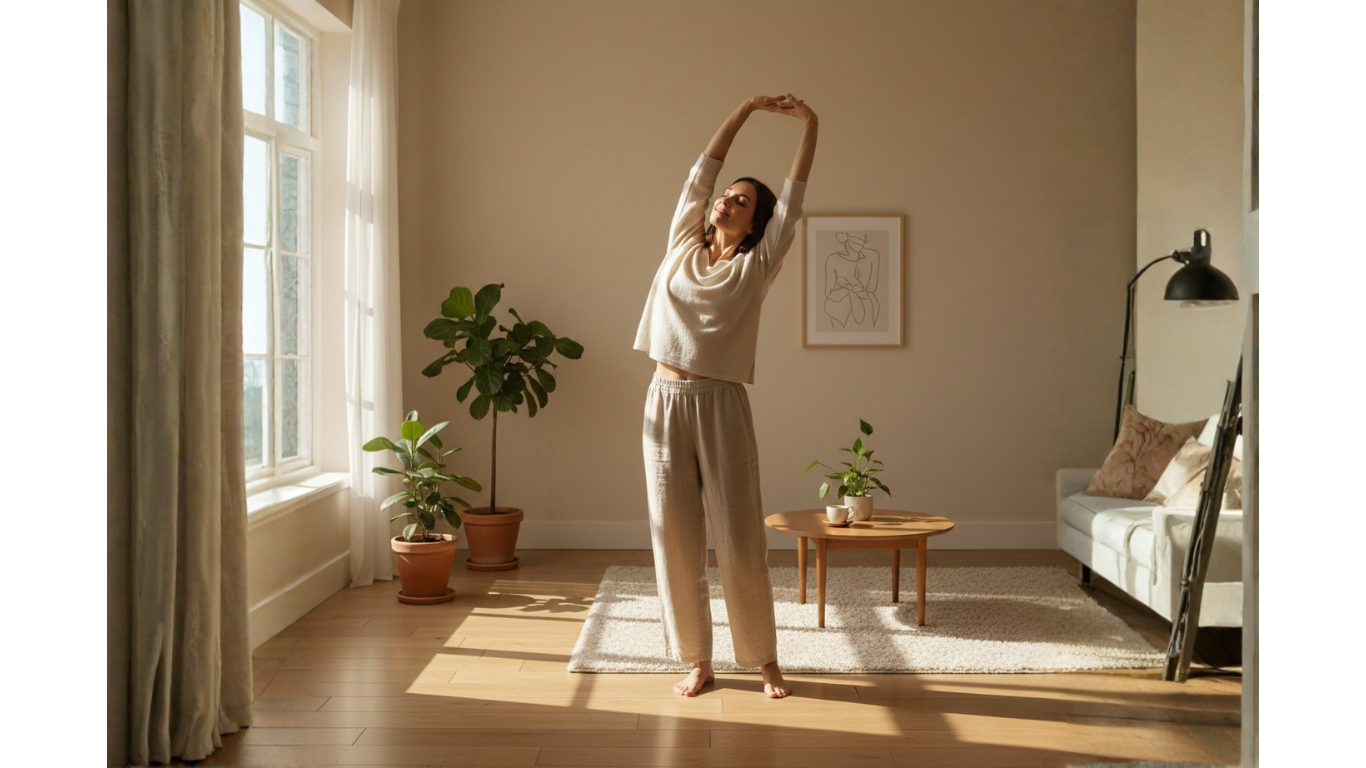
- Restart movement gently, not intensely. Your nervous system responds better to consistency than intensity. Short walks, light stretching, or slow yoga signal safety and readiness. This kind of movement increases energy instead of draining it.
- Use movement to regulate, not perform. Movement is not a test of discipline. It’s a regulation tool. When you move slowly and rhythmically, your body shifts out of stress mode and frees up mental energy.
- Stabilise sleep before optimising routines. Sleep doesn’t improve through willpower. It improves when your system feels safe enough to rest. Consistent wake-up times, morning light exposure, and reducing stimulation in the evening support natural sleep rhythms.
- Create predictable mornings: Motivation returns faster when mornings are predictable. Simple, repeated actions such as drinking water, gentle movement, or a short breathing pause help your nervous system orient itself for the day.
- Let motivation follow action. Waiting to feel motivated keeps you stuck. Small body-based actions activate dopamine pathways that bring motivation back online naturally.
From a scientific perspective, physical movement and sleep regulation directly affect dopamine, cortisol, and circadian rhythms, all of which play a central role in energy and motivation. Research shows that even low-intensity movement improves mood, focus, and sleep quality.
This is also why deeper subconscious work can support lasting change. When beliefs around exhaustion, pressure, or self-judgment soften, the body becomes more willing to engage again.
You don’t need a perfect routine. You need a nervous system that feels safe enough to move, rest, and re-engage.
To explore deeper support around energy, motivation, and nervous system regulation, visit my website to learn more about my work and book a free consultation call. For a clear, accessible explanation of how being active supports mood, reduces stress, and can help you sleep better, see this NHS Every Mind Matters guide: read this article.